
Stavia ScoreStavia ProStavia Mix
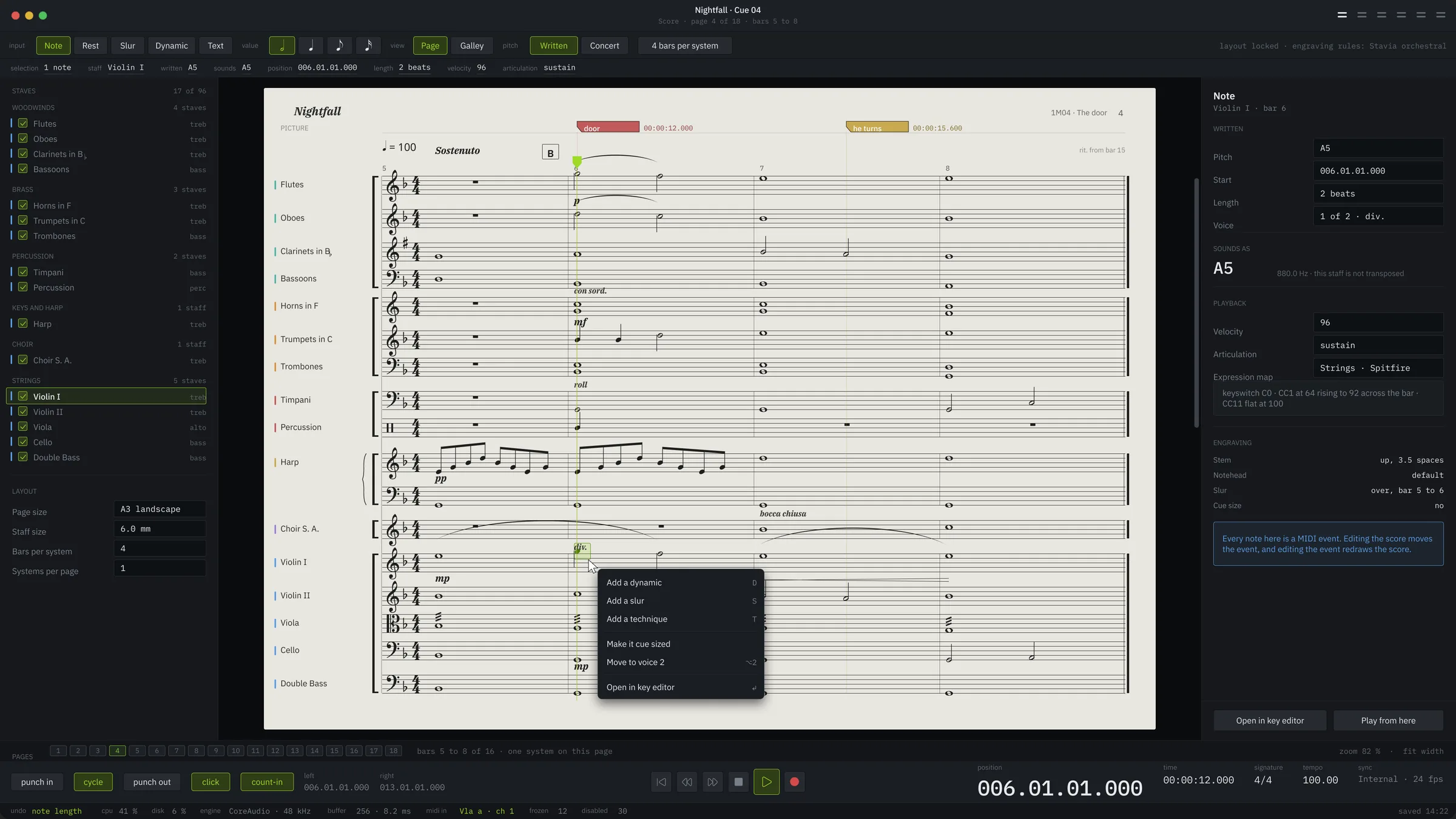
Write on the staff and the MIDI events are written with it, complete with keyswitches and controller curves. Sequence them, then balance them, without leaving the window. Nothing is exported between the three.
Platforms macOS and WindowsStage Internal alphaBeta Q3 2027
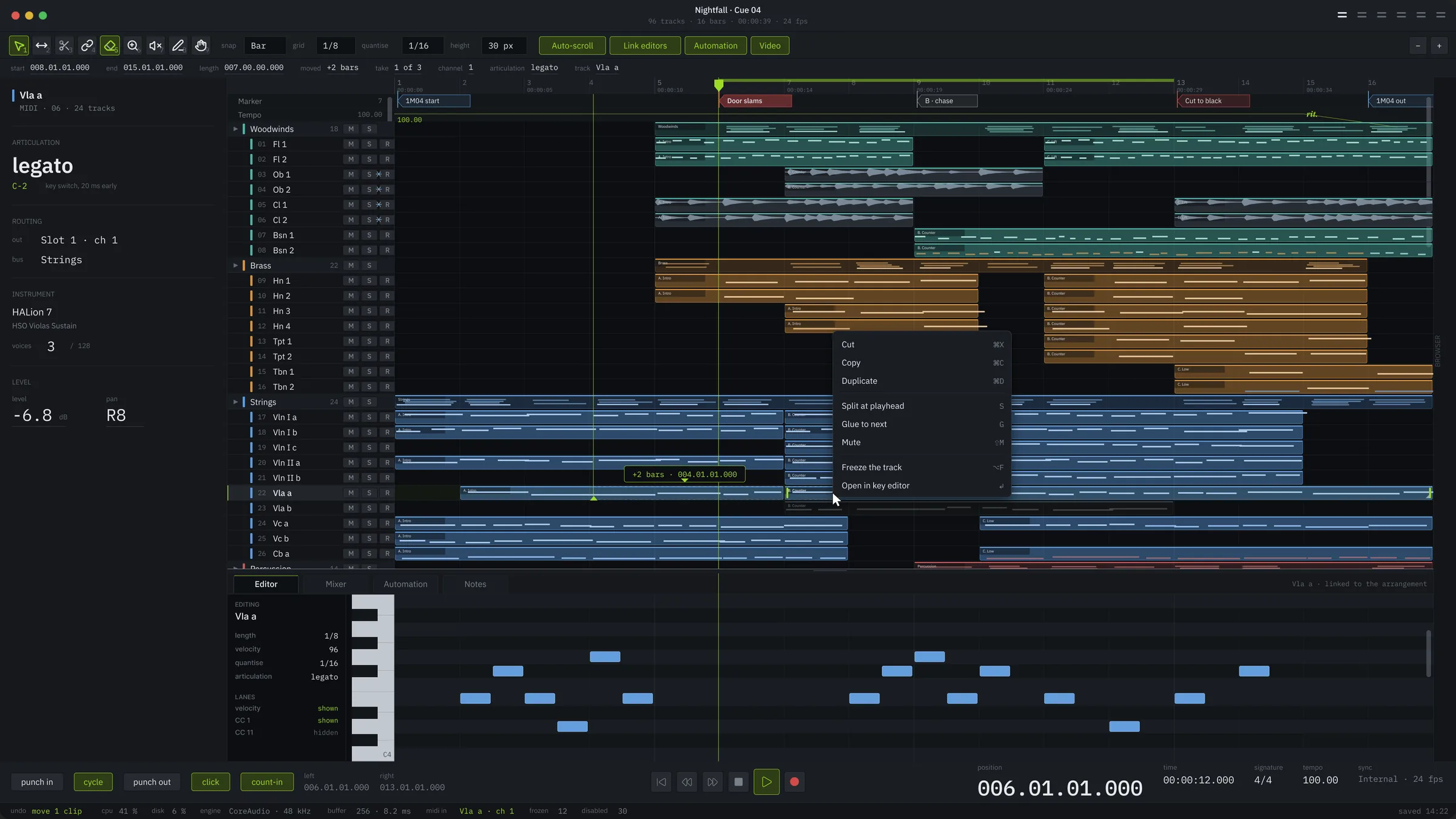
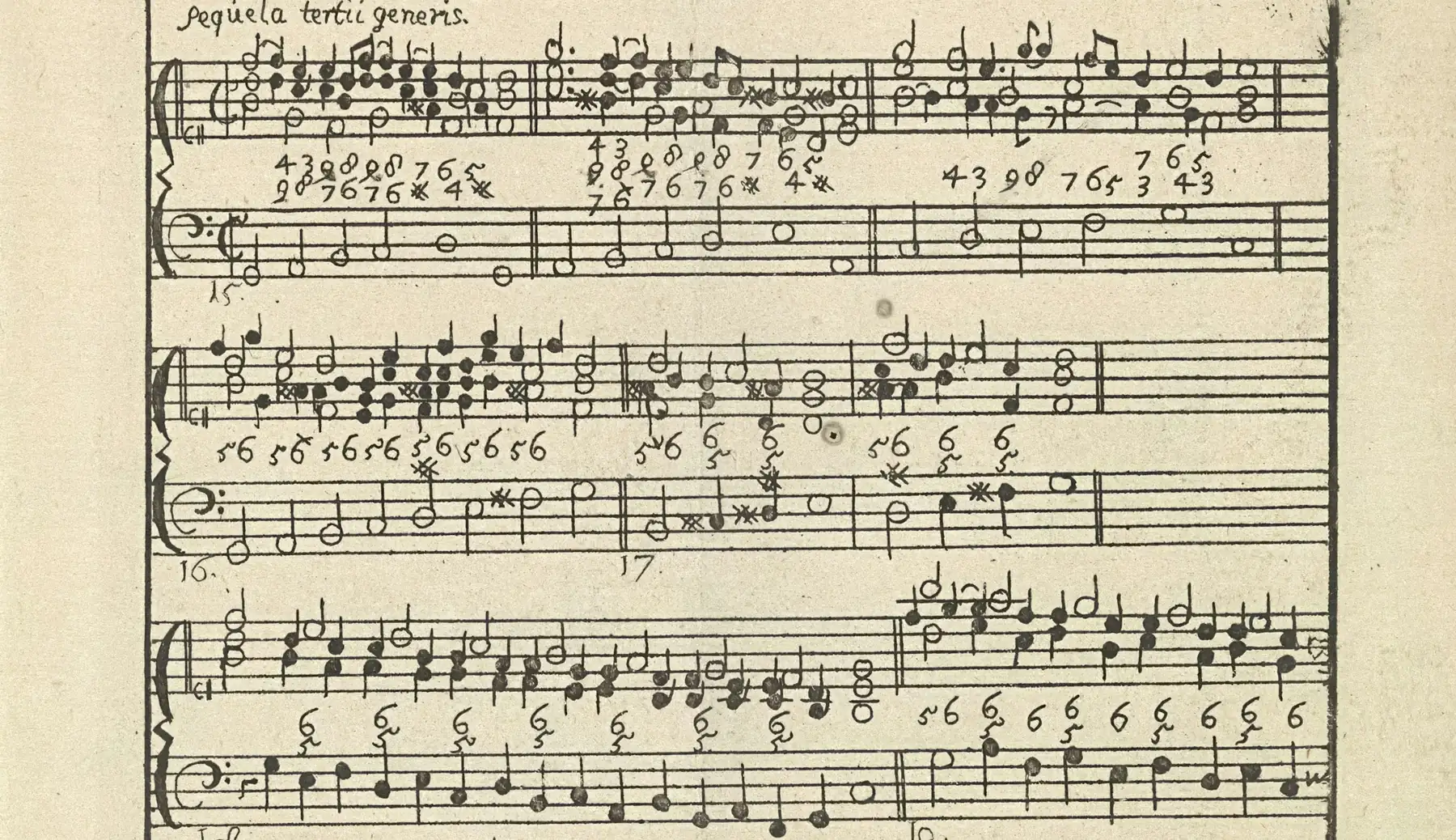
Orchestral music has been written on staves for four hundred years. Stavia keeps it there, and plays it without asking you to convert anything.
Ask for music and it arrives as notation
Stavia Score writes bars, revoices chords, arranges sketches and drafts complete pieces. The result comes back on staves, not as an audio file. Edit it like your own bars. Nothing is applied until you accept it, and every proposal carries the brief or the measurement that produced it.
Six things it will do
The Articulation Library writes the keyswitches for you
Stavia ships expression maps for the sample libraries you already own. Write a slur and the legato patch is selected. Write a staccato dot and the short patch is selected, with the note length adjusted to match. Every map is editable. You can also build your own from scratch.
Keyswitches are sent sixteen ticks ahead of the note, so the library has time to respond before it has to play.
Use the sample libraries you already have
Stavia hosts VST3 and AU instruments in the same process as the score, so Kontakt, EastWest, Vienna and the rest load the way they always have. If an instrument responds to keyswitches, channels or program changes, Stavia can drive it. Most orchestral libraries are mapped already.
- Kontakt
- EastWest
- Vienna Symphonic Library
- Spitfire Audio
- Orchestral Tools
- Cinesamples
- 8Dio
- Heavyocity
- Sonokinetic
- Performance Samples
- Best Service
- Native Instruments
The window
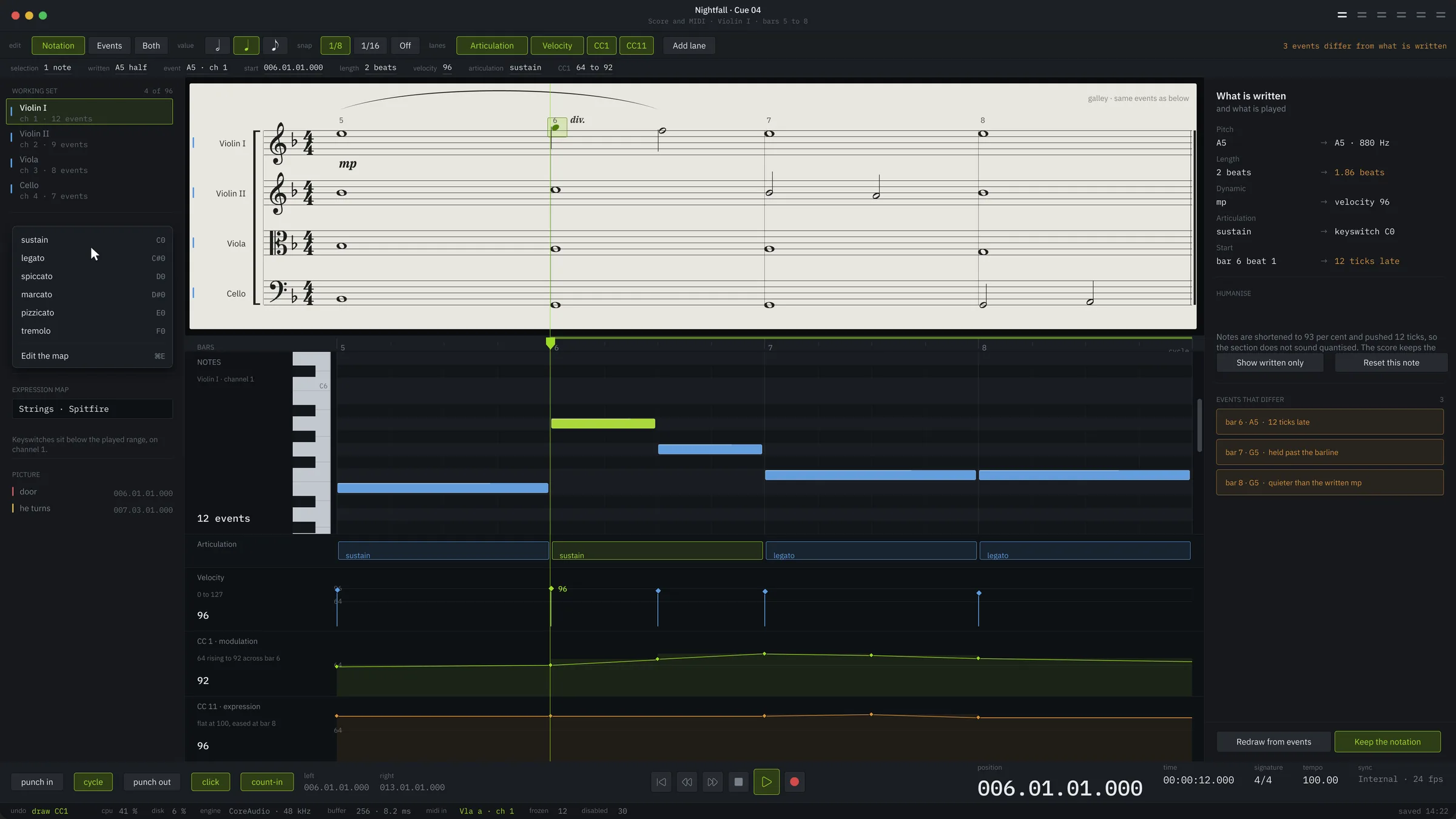
Ninety-six tracks, with picture and tempo on the same ruler
Folders collapse a section to one row. The lower zone edits whatever is selected above it, in notation or in events.
Seventeen staves, engraved as they will be printed
Transposing instruments read correctly, and the hits sit in the margin at the bar where they land.
One set of notes, seen as a page or as events
The staves and the piano roll are two views of the same material. Neither is an export of the other.
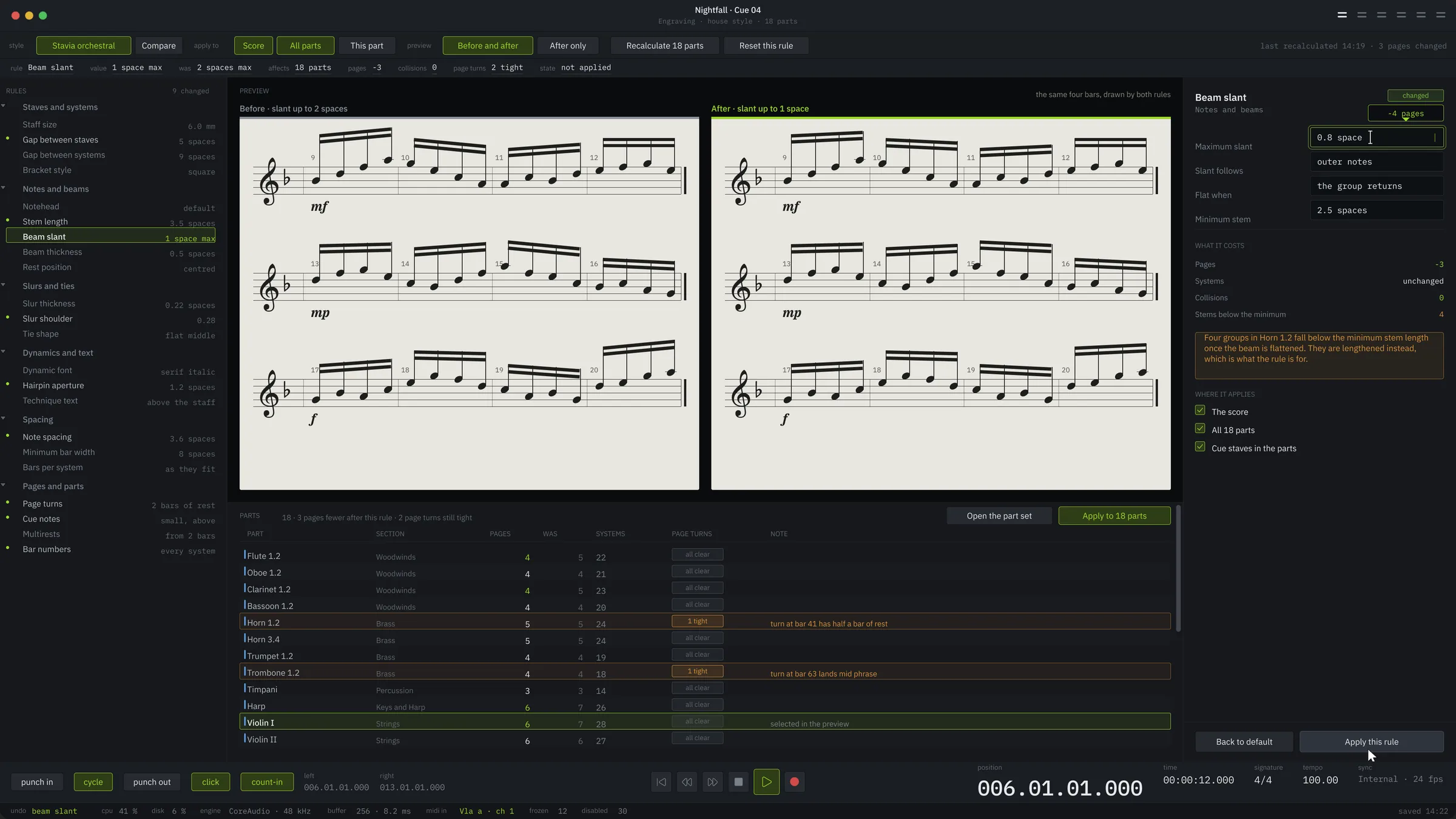
A house rule, costed before it is applied
The same bars drawn both ways, and the price in pages and page turns across all eighteen parts.
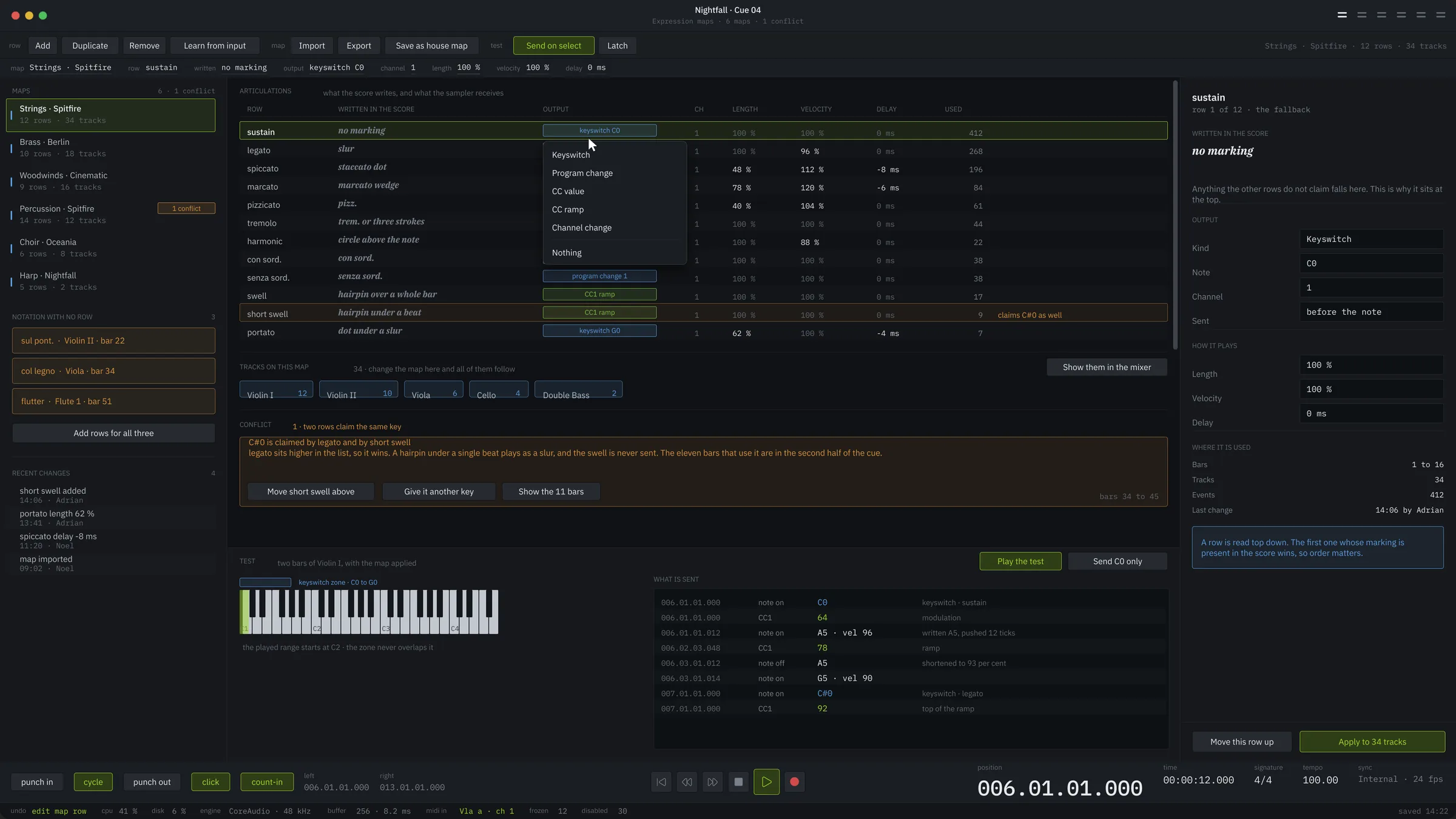
Every expression map, in one editable table
Which marking fires which patch, on which key and which channel. Two markings that want the same key are flagged before playback.
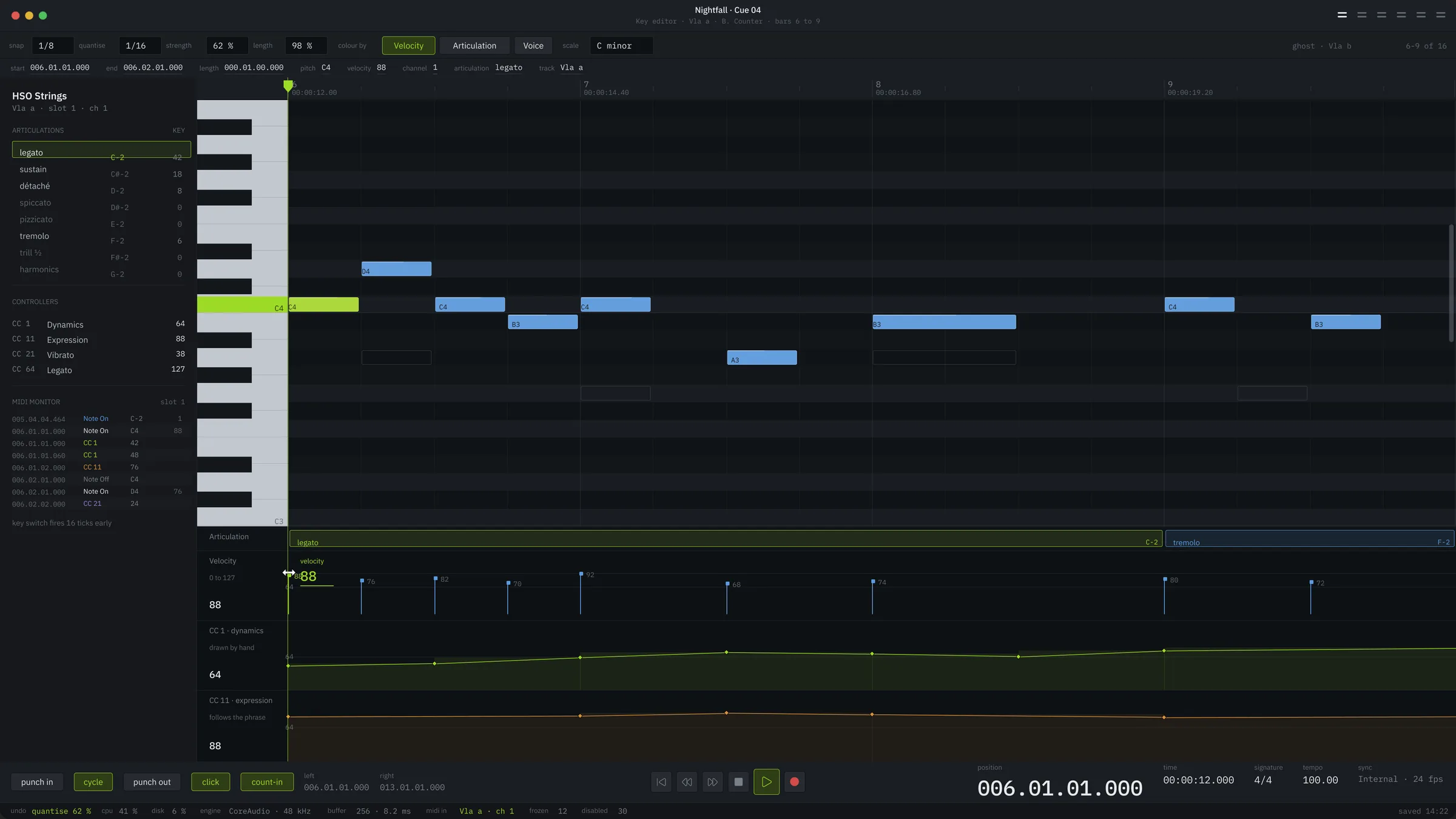
Velocity, CC 1 and CC 11, written with the notes
The curves come with the phrase rather than after it, and the keyswitch is placed early enough for the library to be ready.
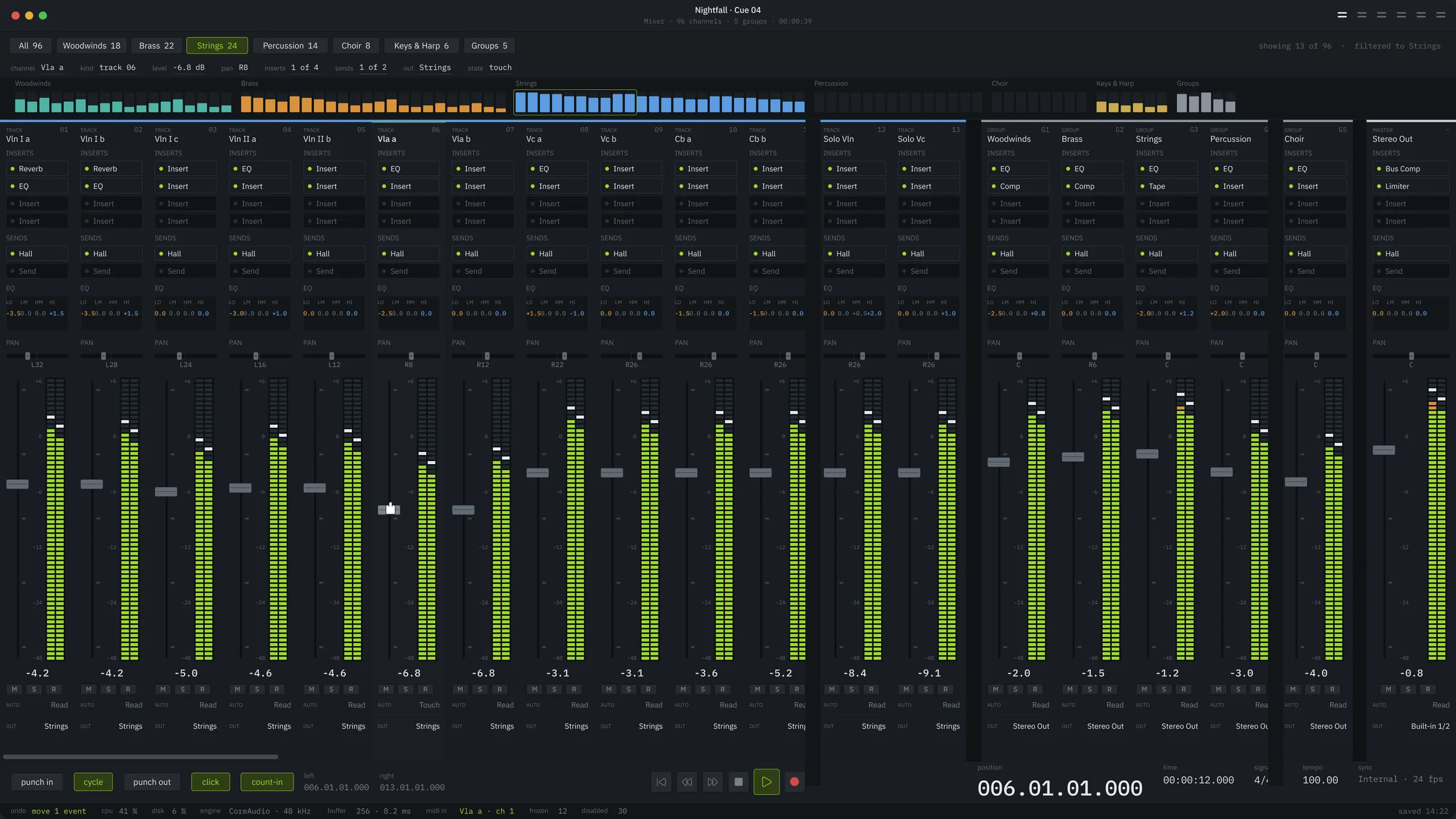
Ninety-six channels, seated like the orchestra
Pans, sends and inserts per desk, with the whole session readable in one overview strip.
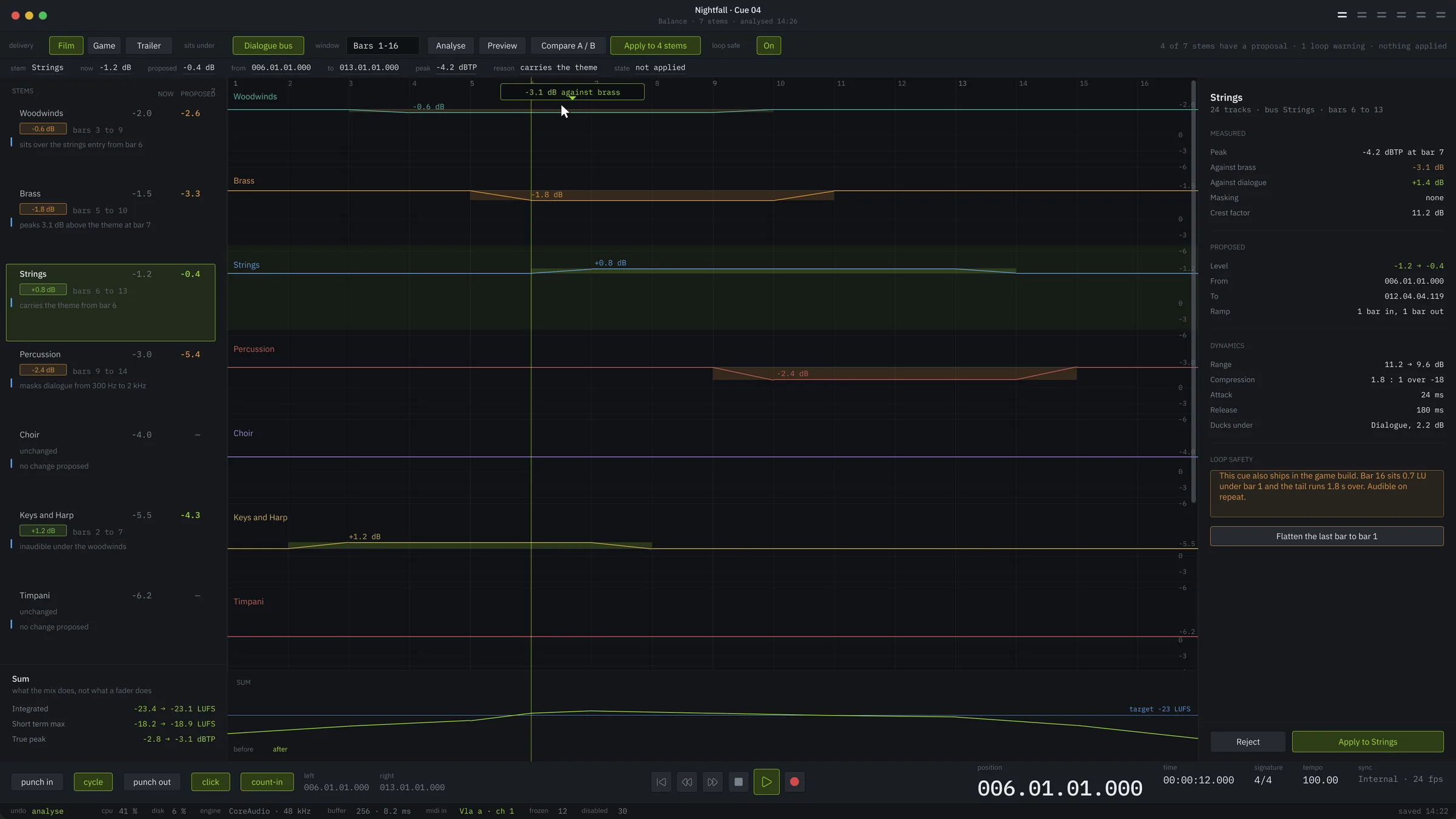
Masking measured, bar by bar
Where the brass covers the strings, the amount is given in decibels and a curve is offered for the bars it affects.
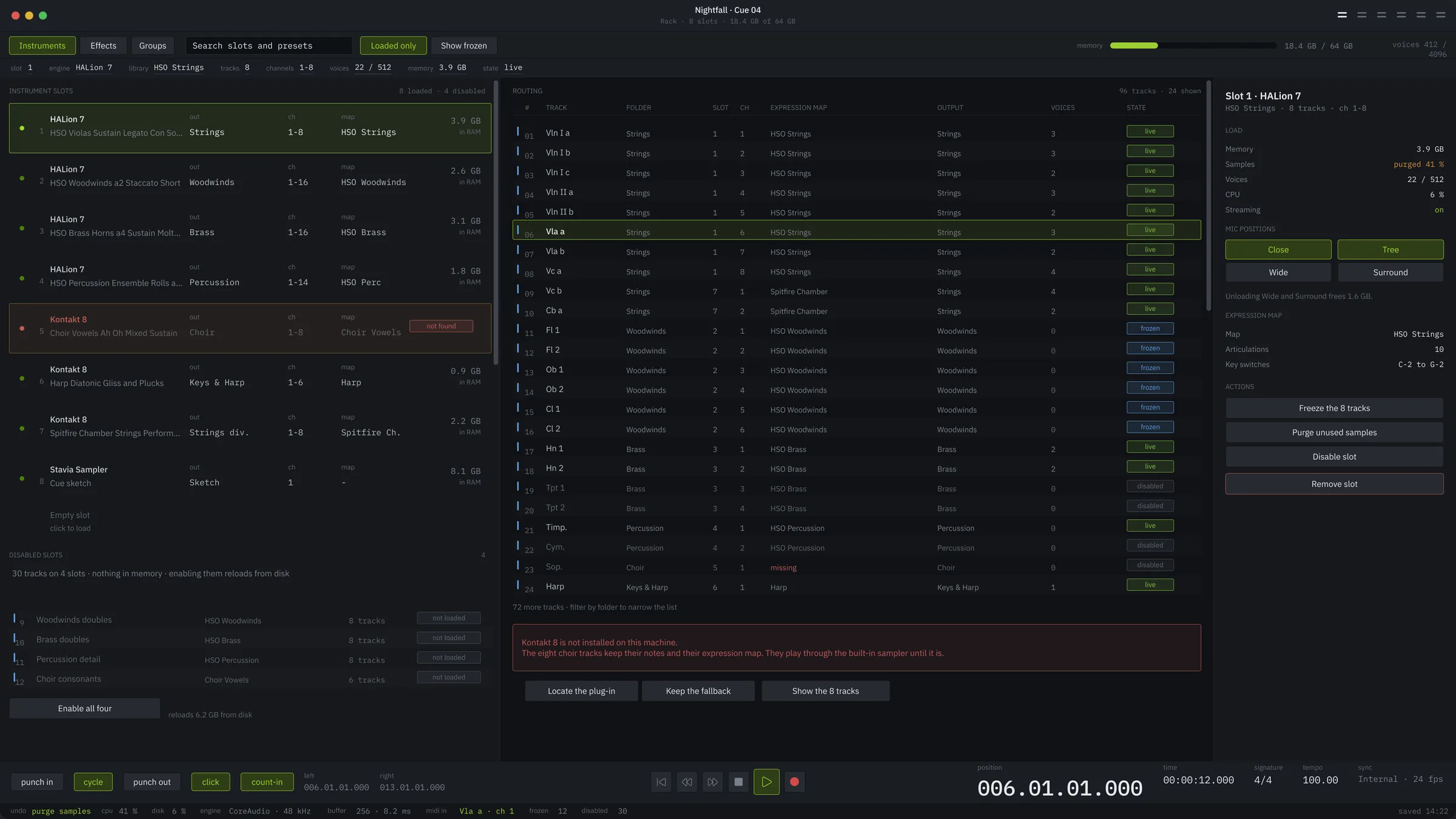
What the session costs, before the session
Memory, voices, frozen tracks and missing plug-ins, on one page. None of it should be a surprise on the day.
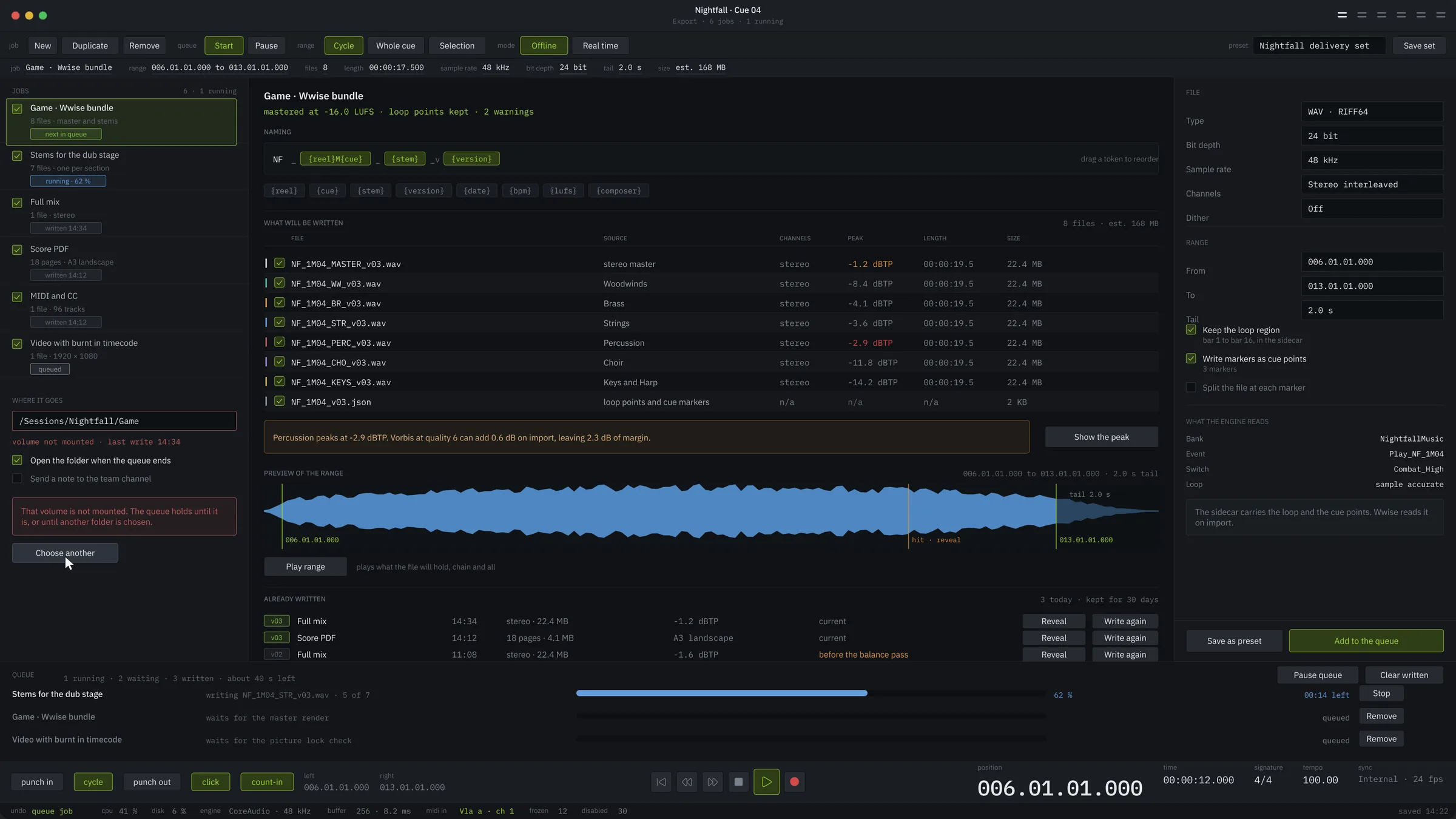
Stems, master, MIDI, MusicXML and the score, in one queue
Naming follows a pattern you set. Loop points travel in a sidecar the game engine reads on import.
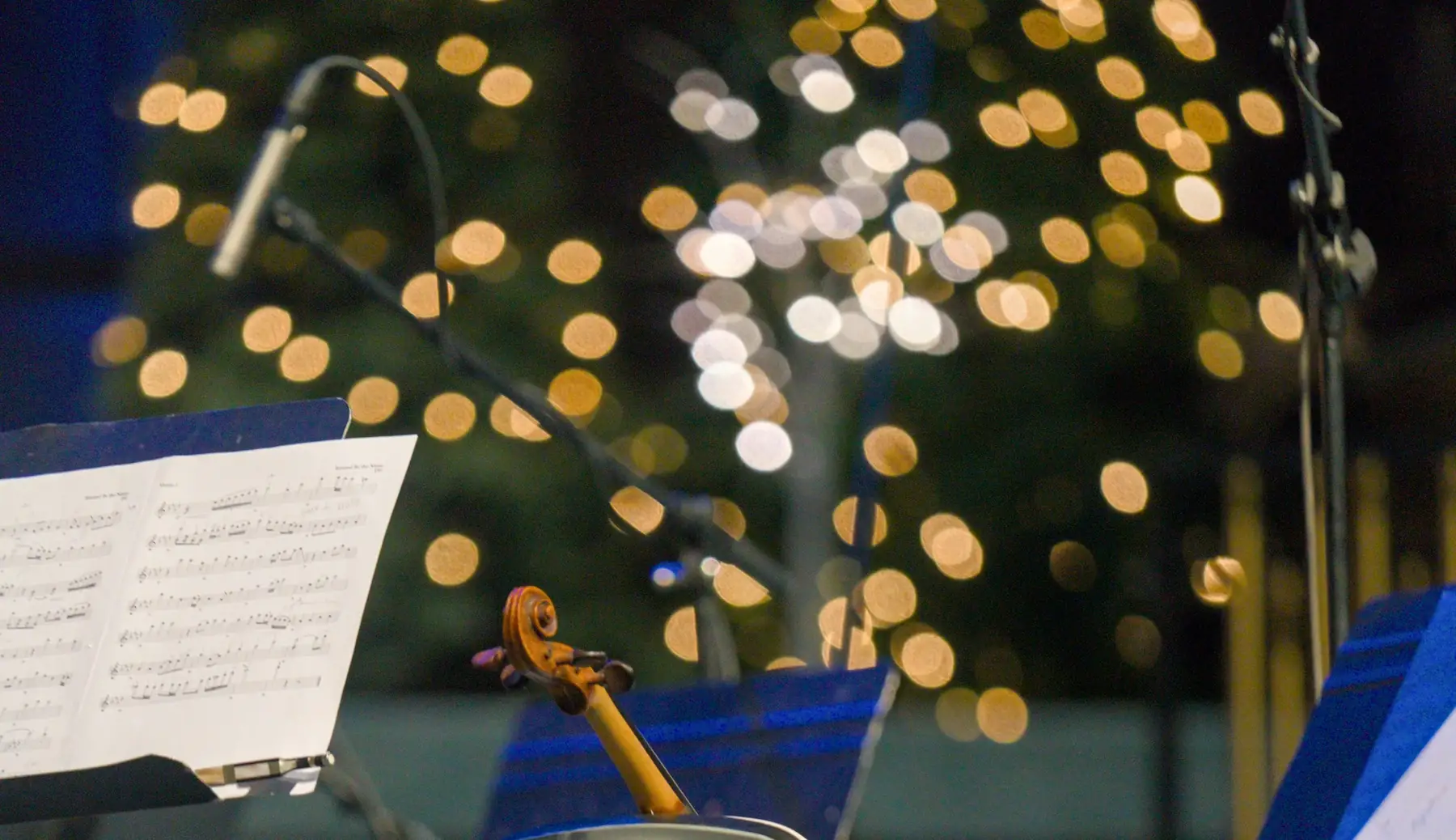
 Photograph by Rapha Wilde, Unsplash.
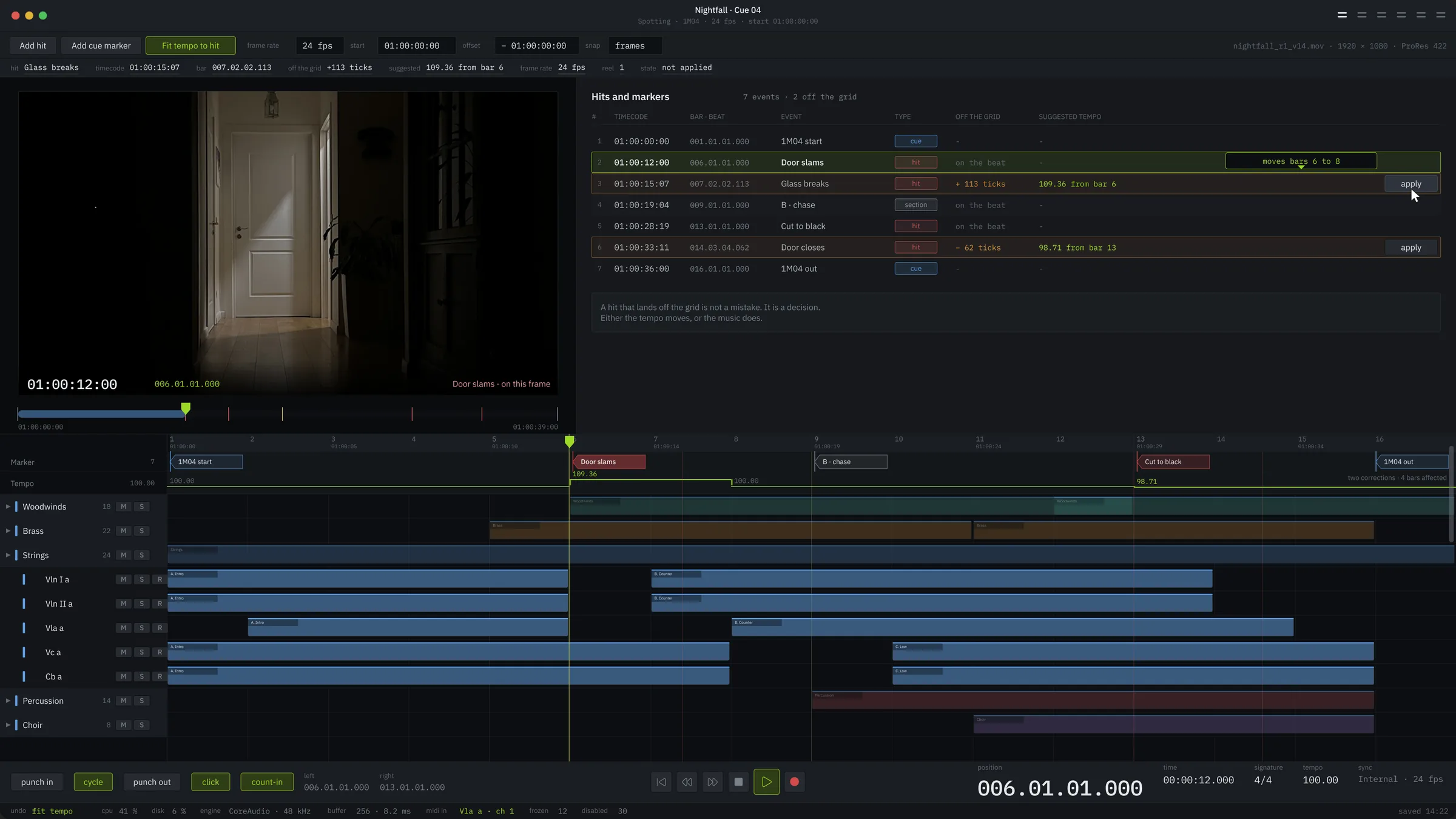
Cue Fit lands your hits on the frame
Load the picture and mark the hits. Stavia shows you which ones fall off the grid, and by how much. Where a hit is close, Cue Fit offers a tempo that lands it exactly and names the bars the change would affect. You decide whether the tempo moves or the music does.
 Photograph by Dylan McLeod, Unsplash.
Delivery Sets meet four targets from one session
Stavia Mix measures your cue against theatrical, streaming, trailer and game targets, and sets a processing chain for each one. Every module shows its reading. Game deliveries are checked around the loop point as well, where half a unit between the last bar and the first is audible on every repeat.
Stavia is built for cues that end up in front of an orchestra, a dub stage or a game engine, and it keeps the same session all the way there.
Listen
Written by the engine, played by an orchestral library, recorded in one pass. Nobody touched a fader.
Volume follows your system. Nothing here starts on its own.
Facts
- Platforms
- macOS and Windows
- Plug-in formats
- VST3 and AU
- Score
- MusicXML and MIDI, in and out
- Audio
- Stems and a stereo master
- Picture
- Video with burnt-in timecode
- Core
- C++, one audio path, one document
Where the work stands
- NowInternal alpha
- NextClosed groups
- Q3 2027Beta
Building a sequencer takes years, and the ones worth opening took decades.
Ask for the alpha
Tell the team what you score, to what deadline, and on what machine. The answer says where the work has reached. No form, no queue.